

In-app retargeting helps Shopify store owners re-engage potential customers by delivering targeted ads or notifications based on user behavior, like abandoned carts or product views. With privacy changes like iOS updates, tools now use technologies like server-side tracking and Conversion APIs to maintain effective retargeting. These tools can significantly reduce costs and increase sales, making them essential for Shopify merchants.
Here are the top tools for in-app retargeting:
- PushEngage: Ideal for push notifications, WhatsApp messaging, and cart recovery, with pricing starting at $0/month.
- Churn Buster: Focuses on subscription retention by addressing failed payments and cancellations.
- Easy Facebook & Instagram Ads: Automates retargeting on Meta platforms with plans starting at $39.95/month.
- Carts Guru: A multi-channel solution (email, SMS, Messenger) with fallback logic, starting under $10/month.
- AdRoll: Covers display, social, and video ads with a $5/day minimum ad spend.
- OptinMonster: Uses popups and exit-intent campaigns to keep visitors engaged, starting at $49/month.
Each tool offers unique features tailored to specific retargeting needs. Below is a quick comparison for better clarity.
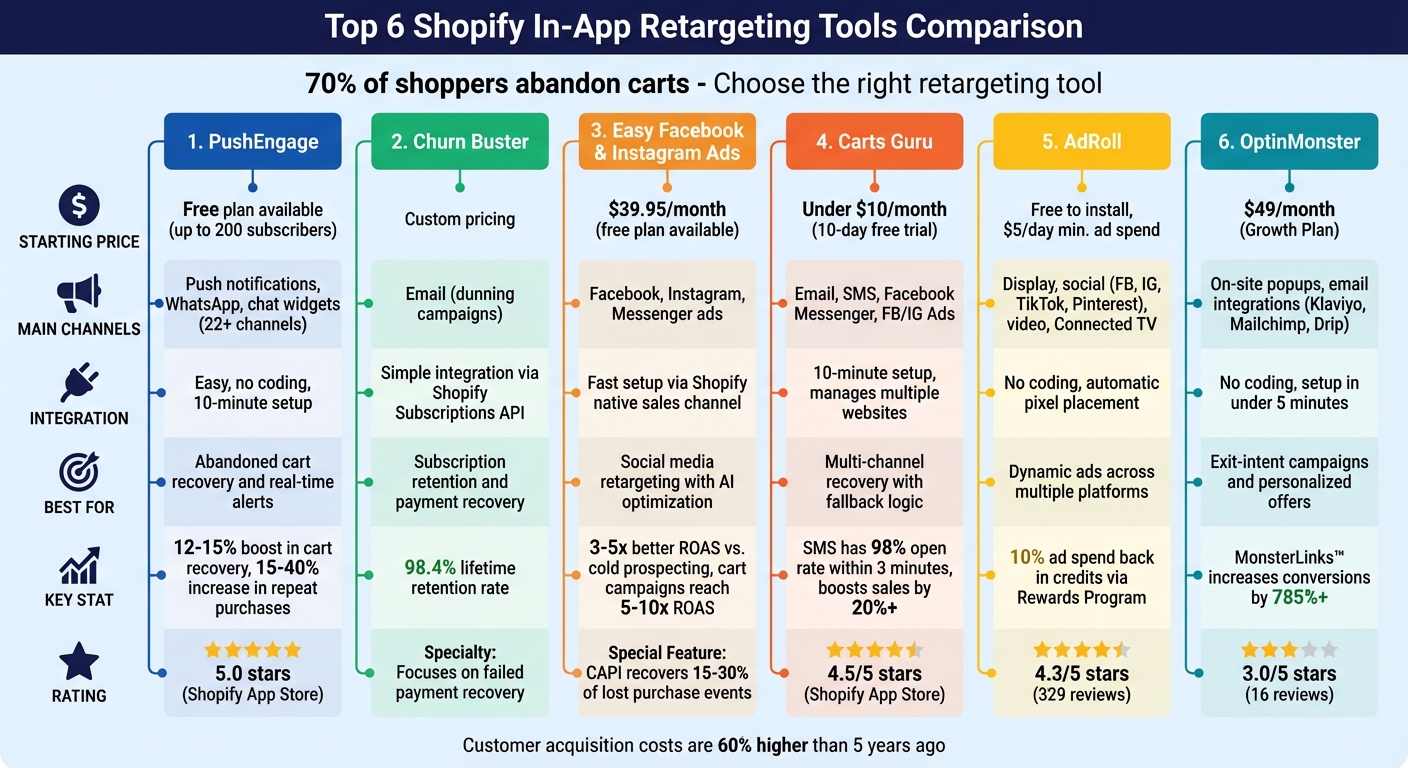
Top 6 Shopify In-App Retargeting Tools Comparison Chart
Dynamic Retargeting Shopify: Best Shopify Retargeting Apps

sbb-itb-8b1a57a
Quick Comparison
| Tool | Starting Price | Main Channels | Best For |
|---|---|---|---|
| PushEngage | Free plan available | Push notifications, WhatsApp, chat | Abandoned cart recovery and real-time alerts |
| Churn Buster | Custom pricing | Email (dunning campaigns) | Subscription retention and payment recovery |
| Easy Facebook & Instagram Ads | $39.95/month | Facebook, Instagram ads | Social media retargeting with AI optimization |
| Carts Guru | Under $10/month | Email, SMS, Messenger | Multi-channel recovery with fallback logic |
| AdRoll | $5/day ad spend | Display, social, video ads | Dynamic ads across multiple platforms |
| OptinMonster | $49/month (Growth Plan) | On-site popups, email integrations | Exit-intent campaigns and personalized offers |
Choose a tool that aligns with your store’s goals, whether it's cart recovery, subscription retention, or multi-channel retargeting. These tools can help you recover lost sales and boost revenue effectively.
1. PushEngage
PushEngage helps merchants reconnect with customers through web push notifications (desktop and mobile), in-app alerts, WhatsApp messaging, and chat widgets that span over 22 channels. This broad coverage allows businesses to reach shoppers on the platforms they use most frequently. Let’s take a closer look at its pricing, integration process, and key use cases.
Setting up PushEngage is a breeze for Shopify marketers, even those without technical expertise. The integration takes about 10 minutes and requires no coding. It syncs seamlessly with your Shopify product catalog, automating notifications for price drops and back-in-stock alerts. For mobile app retargeting, PushEngage also offers SDKs compatible with Android, iOS, Flutter, and React Native.
Retargeting Channels Supported
PushEngage supports multiple retargeting options, including web and mobile app push notifications, WhatsApp automation, and chat widgets that can route messages across 22+ channels. WhatsApp integration is particularly effective for cart recovery, as it connects with customers directly on their preferred messaging app. Additionally, the platform’s "inboxless" chat widgets streamline inquiries by redirecting them to WhatsApp, SMS, or email.
Starting Price
PushEngage offers flexible pricing plans to fit various business needs:
- Free Plan: $0/month (includes up to 200 subscribers, 30 campaigns, and a free WhatsApp widget)
- Automation Plan: $19/month ($49 annually) with unlimited WhatsApp messaging and AI-driven campaigns
- Enterprise Plan: $199/month ($799 annually) featuring unlimited subscribers, multiple sites, and dedicated support
Ease of Shopify Integration
PushEngage has earned a perfect 5.0-star rating on the Shopify App Store (based on 8 reviews), with users frequently highlighting its fast setup and immediate results. Alex Avery, Database Marketing Executive, shared:
"PushEngage is quick and easy to implement. It provides results promptly and the analytics presents them in a clear and understandable fashion."
The platform’s pricing model is based on active subscribers rather than message volume, offering predictable costs as your subscriber list grows.
Best Use Cases
PushEngage shines when it comes to recovering abandoned carts and managing browse abandonment campaigns. Its real-time notifications engage customers as soon as they leave a shopping session, targeting high-intent buyers before they’re gone for good. Merchants have reported impressive results, including a 12–15% boost in cart recovery and a 15–40% increase in repeat purchases. Some businesses, like WickedWeasel and Saleduck, have seen weekly revenue gains of over $4,000 and attributed 3% of their total revenue to web push notifications.
Beyond cart recovery, PushEngage supports transactional messaging for order updates, shipping notifications, and refund alerts, ensuring customers stay informed throughout their purchase journey. Push notifications through this platform often outperform email or social media campaigns, achieving up to 5 times higher engagement rates. Opt-in rates typically range between 15% and 35%, making it a powerful tool for keeping shoppers engaged.
2. Churn Buster
Churn Buster takes a different approach compared to standard cart recovery tools. Instead of focusing on first-time purchases, it zeroes in on retaining subscriptions by tackling payment failures and reducing cancellation risks. With over a decade of experience, this platform has managed billions in subscription revenue and boasts an impressive 98.4% lifetime retention rate, making it a go-to for subscription-based businesses.
Retargeting Channels Supported
Churn Buster stands out by focusing on Recovery Campaigns tailored for failed payment recovery and cancellation prevention. Unlike tools that rely on push notifications or social media ads, it uses adaptive retry logic, drawing on a wealth of data to automatically re-engage subscribers after payment issues. Additionally, its personalized cancel flows help businesses understand why customers leave and enable proactive steps to keep them engaged.
Ease of Shopify Integration
Churn Buster integrates smoothly with Shopify using the Shopify Subscriptions API. It also works with leading subscription platforms like Recharge, Loop, Skio, Smartrr, and Stripe. For businesses with custom setups, there's an API option available. This platform enhances Shopify's native dunning tools by offering advanced frameworks suitable for enterprise-level subscription recovery. Its flexibility ensures it fits seamlessly into any subscription platform or custom configuration.
Starting Price
Churn Buster's pricing depends on subscription volume and the specific needs of the business. It's tailored for Shopify stores with recurring revenue models and B2B SaaS companies requiring robust dunning management.
Best Use Cases
Churn Buster is an essential tool for Shopify merchants operating on subscription models. It automates payment retries and notifications, helping recover revenue lost to expired or declined cards. By addressing both passive churn (from failed payments) and active churn (from cancellations), it helps businesses boost customer lifetime value and minimize revenue loss. While many retargeting tools focus on abandoned carts, Churn Buster re-engages existing subscribers, making it a critical piece of any subscription recovery strategy.
3. Easy Facebook & Instagram Ads
Easy Facebook & Instagram Ads simplifies retargeting campaigns on Facebook, Instagram, and Messenger by using AI to optimize budgets. It turns Shopify product images into ads automatically, removing the need for manual design. The platform manages campaigns across all stages of the funnel: awareness, consideration, decision, and loyalty. A standout feature is its Conversions API (CAPI) integration, which recovers 15–30% of purchase events that would otherwise be lost due to iOS privacy changes and ad blockers . This ensures effective retargeting across Meta’s platforms.
Retargeting Channels Supported
This tool focuses on retargeting within Meta’s ecosystem, dynamically adjusting daily ad spend based on performance. It targets high-intent audiences like cart abandoners and product viewers. For businesses already running Meta ads, enabling CAPI is a game-changer - retargeting campaigns on Meta often deliver 3–5x better ROAS compared to cold prospecting, with cart abandonment campaigns sometimes reaching 5–10x ROAS.
Ease of Shopify Integration
Integrating with Shopify is quick and straightforward. The process uses Shopify’s native sales channel, which automates tasks like Meta Pixel installation, Conversions API setup, and product catalog syncing. This no-code setup takes just minutes. To maximize tracking accuracy, merchants should select the "Maximum" data sharing level during installation, which fully activates the Conversions API and mitigates browser tracking limitations.
Starting Price
There’s a free plan that includes a Business Manager audit, product page audit, and pixel setup. Paid plans begin at $39.95/month, offering one done-for-you advertising funnel with AI-generated ad copy. The Pro plan, priced at $59.95/month, includes unlimited funnels and hourly product feed updates.
Best Use Cases
This tool shines in cart recovery and checkout abandonment campaigns, leveraging Dynamic Product Ads to display products users have already viewed. For example, one merchant scaled a $20 daily ad spend into $57,000 in revenue with 712 orders in just 30 days. It’s also ideal for customer retention campaigns, such as cross-sell offers or reminders to replenish consumable products. Considering only 2–3% of first-time visitors make a purchase, retargeting plays a crucial role in converting the remaining 97%. These features highlight how Shopify merchants can use in-app retargeting to reclaim lost revenue effectively.
4. Carts Guru
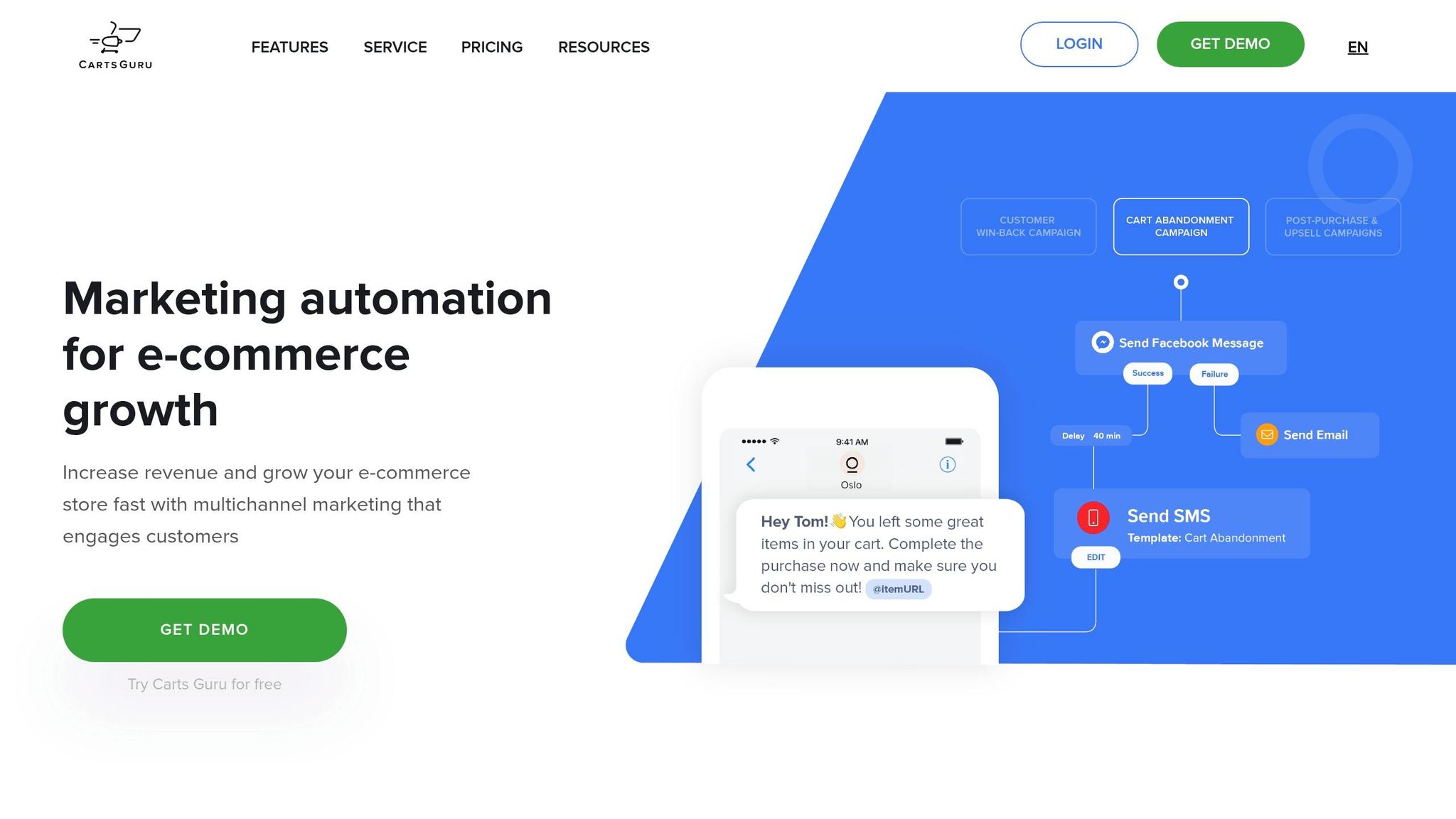
Carts Guru expands the realm of in-app retargeting with its standout feature: fallback logic. This platform offers a multichannel retargeting solution that integrates email, SMS, Facebook Messenger, and Facebook/Instagram Ads seamlessly [22, 24]. The "fallback logic" ensures no customer slips through the cracks - if an email goes unopened, a follow-up SMS or Messenger notification is automatically triggered. To further engage visitors before they leave, Carts Guru also includes on-site tools like exit-intent pop-ups and spin-to-win wheels.
Retargeting Channels Supported
Carts Guru goes beyond basic messaging by enabling advanced customer segmentation based on behavior. Among its channels, SMS stands out for time-sensitive campaigns, with an impressive 98% open rate within 3 minutes. Louise from Carts Guru highlights its effectiveness:
"SMS is the perfect channel for abandoned cart retargeting. Bringing back a lost customer is a time-sensitive situation. You need to reach the customer while their intent to purchase is at its peak".
Ease of Shopify Integration
Integrating Carts Guru with Shopify is a breeze, taking just about 10 minutes through the Shopify App Store. It even supports managing multiple websites at no additional cost. The platform offers pre-built templates for tasks like cart recovery, win-back campaigns, and post-purchase follow-ups, eliminating the need for custom coding.
Starting Price
Carts Guru provides a 10-day free trial to let users explore its features. Afterward, the free tier supports up to 3,000 messages, with SMS costs billed separately based on usage. The Starter plan covers up to 100 carts per month, with additional carts costing $0.49 each. For larger needs, the Medium plan handles up to 300 carts monthly, with extra carts billed at $0.39 each. SMS messages are free for recipients in the US and Canada. The app has earned a 4.5/5 star rating on the Shopify App Store, with users frequently praising its high return on investment and efficient multichannel workflows.
Best Use Cases
Carts Guru shines in scenarios where reaching customers across multiple channels is crucial. Its fallback logic is particularly effective for browse abandonment campaigns, customer win-back strategies, and order confirmations. According to the platform, its features can boost sales by at least 20%. With automated discount management and smart channel sequencing, it's a great choice for merchants looking to optimize recovery rates without juggling multiple tools manually.
5. AdRoll
AdRoll provides Shopify merchants with a powerful multi-channel retargeting tool through its advanced advertising platform. Unlike single-channel tools, AdRoll covers a wide range of ad placements, including display ads, native ads, mobile apps, video, Connected TV (CTV), and social media platforms like Facebook, Instagram, TikTok, and Pinterest. Its "Programmatic Predictions" engine, powered by over a decade of data, automates bidding and audience targeting to reach shoppers across these popular channels.
Retargeting Channels Supported
One of AdRoll's standout features is its ability to manage all campaigns from a single dashboard. After installation, it automatically creates four high-intent audience segments: Shopify Checkout (purchasers), Added Product to Cart, Viewed Cart, and 1+ Products Viewed. Dynamic product ads then highlight the specific items shoppers interacted with, encouraging them to complete their purchase. Additionally, Shopify CRM segments can be synced to target customers based on details like birthdays, loyalty status, or first purchase date, making it easier to improve customer lifetime value. This streamlined approach simplifies campaign management while offering seamless integration with Shopify.
Ease of Shopify Integration
AdRoll makes integration a breeze, requiring no coding skills. Upon installation, it automatically places a tracking pixel, syncs the product feed, and creates targetable audiences. Hannah Lewis, Head of PPC & Affiliates at Lounge Underwear, noted:
"The AdRoll app for Shopify Plus integrated incredibly easily and efficiently for us - what can take weeks or even months for developers to implement took just minutes".
Additionally, Shopify merchants benefit from the AdRoll Rewards Program, which provides 10% of their ad spend back in ad credits.
Starting Price
AdRoll is free to install and has no upfront fees. Campaigns require a minimum daily budget of $5.00, with ad spend billed separately. With a 4.3/5 star rating from 329 reviews on the Shopify App Store, merchants frequently commend its smooth integration and ability to deliver solid returns on ad spend.
Best Use Cases
AdRoll is particularly effective for cart recovery, targeting "Added Product to Cart" and "Viewed Cart" segments for quick results. It’s also great for boosting brand awareness, encouraging repeat purchases, and supporting global expansion. Its automation feature allows merchants to manage campaigns across TikTok, Facebook, Instagram, and Pinterest simultaneously, minimizing the hassle of handling multiple platforms.
6. OptinMonster
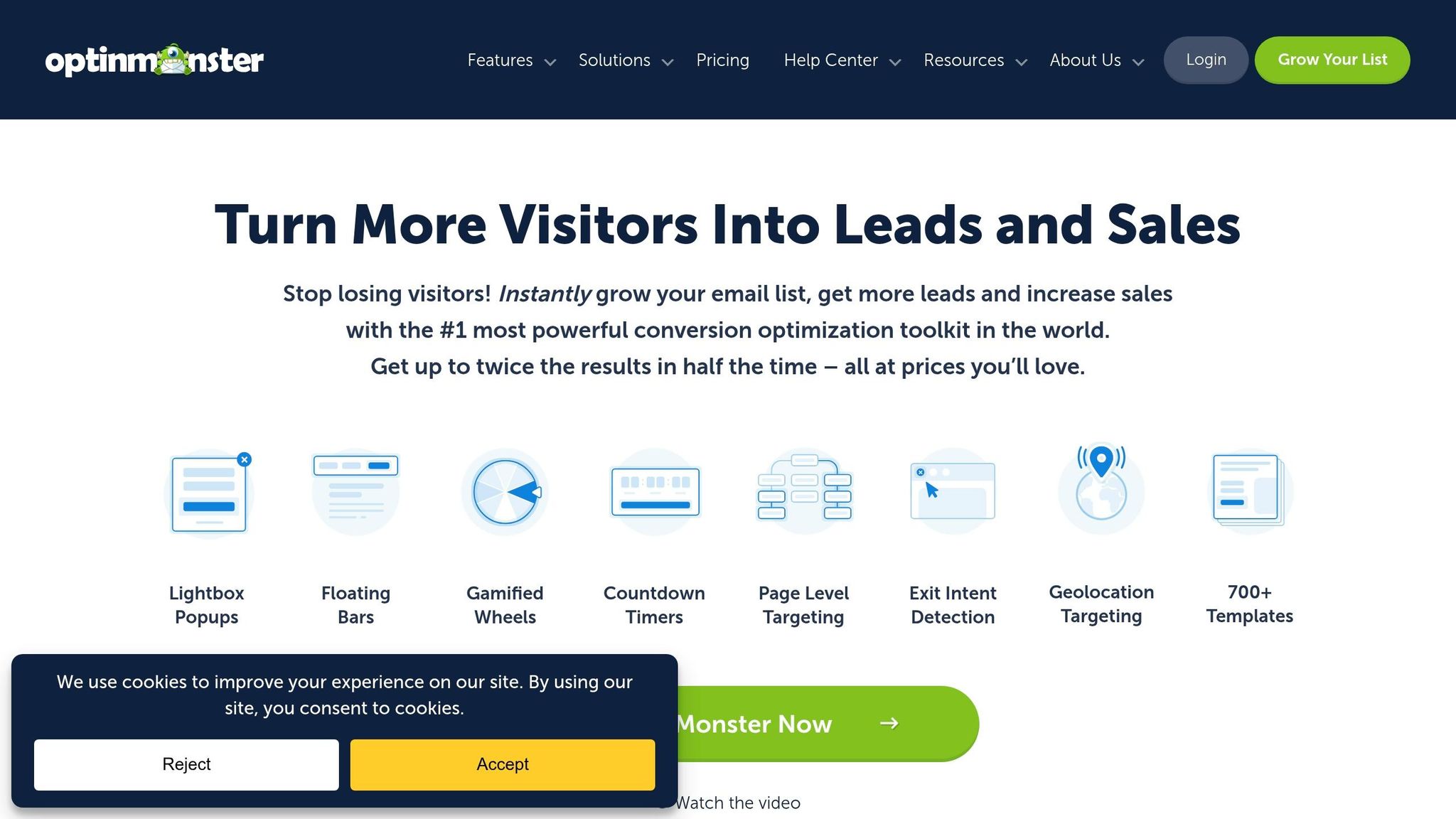
OptinMonster zeroes in on engaging visitors while they're actively browsing your Shopify store. By leveraging behavioral triggers, it displays personalized campaigns aimed at capturing attention and turning potential abandoners into customers. The platform offers nine campaign types, including lightbox popups, floating bars, slide-ins, and even gamified coupon wheels. This approach complements other retargeting channels, creating more opportunities to convert visitors into buyers.
Retargeting Channels Supported
OptinMonster's OnSite Retargeting® feature identifies returning visitors and tailors offers based on their previous activity. Its standout Exit-Intent® Technology detects when a user is about to leave your store and launches a targeted campaign to keep them engaged. Integration with over 30 email platforms, such as Klaviyo, Mailchimp, and Drip, enables follow-up campaigns after collecting visitor information.
Ease of Shopify Integration
Integrating OptinMonster with Shopify is straightforward and doesn't require coding. The Shopify app syncs directly with your OptinMonster account, letting you launch campaigns in under five minutes. All you need to do is enable an "App Block" in Shopify's theme editor. Mitch Smith, Managing Director of Shockbyte.com, shared that exit-intent popups helped double their conversion rate. However, Shopify-specific features require the Growth subscription plan, which costs $49 per month.
Starting Price
The Growth Plan, priced at $49.00 per month, is billed through Shopify. This subscription unlocks advanced targeting options like "Cart Total", "Cart Contains", and "Product Targeting", which allow campaigns to trigger based on cart contents or specific product pages. OptinMonster also offers a 14-day money-back guarantee. Currently, it holds a 3.0/5 star rating from 16 reviews on the Shopify App Store.
Best Use Cases
OptinMonster shines when it comes to recovering abandoned carts. Using Shopify-specific display rules, it can present offers like discounts or free shipping to visitors who are about to leave their carts behind. James Edge, Director of Marketing and Operations at Crush Empire, shared an impressive result:
"OptinMonster is so easy anyone can pick it up and start a campaign in less than 10 minutes. If you're not using it, you're missing out on sales".
Another powerful feature, MonsterLinks™, has been shown to increase conversions by over 785%, making it an effective tool for boosting engagement and driving sales.
Tool Comparison Table
Each tool is crafted to help recover sales by reconnecting with customers at key moments in their shopping journey. Below is a breakdown of the top in-app retargeting tools for Shopify, highlighting their features and best use cases.
| Tool | Starting Price | Main Retargeting Channels | Shopify Integration | Best For |
|---|---|---|---|---|
| PushEngage | Free plan available | Push notifications (web, mobile, AMP) | Easy, no coding needed | Re-engaging visitors with timely push notifications and abandoned cart recovery |
| Churn Buster | Custom pricing | Email (dunning campaigns) | Simple integration | Recovering failed subscription payments and reducing involuntary churn |
| Easy Facebook & Instagram Ads | Free to install | Facebook and Instagram ads | Fast setup | Automating social ad campaigns for product retargeting |
| Carts Guru | Starts at under $10/month | Email, SMS, Facebook Messenger, push notifications | Fast setup | Multi-channel abandoned cart recovery for small to mid-sized stores |
| AdRoll | Free to install; ad spend varies | Display ads, social ads (TikTok, Meta, Pinterest), unlimited email campaigns | Fast setup | Reclaiming lost sales through dynamic display and social retargeting |
| OptinMonster | $49.00/month (Growth Plan) | On-site popups; email integrations (e.g., Klaviyo, Mailchimp, Drip) | No coding; setup in under 5 minutes | Capturing abandoning visitors with exit-intent popups and personalized offers |
This comparison table simplifies the decision-making process by outlining pricing, retargeting channels, and ease of Shopify integration. Pricing options range from free plans to subscriptions starting at $49.00/month for advanced features. Tools like AdRoll stand out with support for dynamic display ads and multiple social platforms, while others focus on specific channels like email or push notifications.
Conclusion
Pick a tool that fits your budget, technical requirements, and business goals. Beyond the platforms reviewed earlier, here are a few more options to refine your retargeting strategy. For small businesses with tight budgets, SharpSpring Ads and Azameo stand out with free-to-install models and pay-as-you-go pricing, making them accessible choices. If you're a growing store looking to automate and scale, Scalify offers features like advanced audience building and budget optimization, starting at $49 per month
If your store sees plenty of traffic but struggles with conversions, Customers.ai could be a game-changer. It identifies anonymous visitors and helps recover lost revenue, with users reporting a 2x boost in sales and a 50% drop in Cost Per Acquisition in just one week.
For businesses that need precise tracking and reliable data, Infinite Google Ads Tracking is worth considering. Its server-side integration and stellar 5.0/5 rating across 64 reviews make it an excellent choice. Multi-channel sellers on TikTok and Facebook can also benefit from unified pixel management, which simplifies tracking and improves accuracy.
With 70% of shoppers abandoning their carts and customer acquisition costs now 60% higher than they were five years ago, retargeting is no longer optional - it’s essential for profitability. Start with the tool that addresses your store’s biggest revenue gap, and expand your retargeting toolkit as your business scales.
FAQs
Which retargeting tool is best for my Shopify store goal?
The best retargeting tool for your Shopify store will vary based on what you're aiming to achieve. Akohub stands out for its AI-powered campaigns that work seamlessly across multiple platforms. If you're looking for an all-in-one solution with smooth integration, SharpSpring Ads is a strong contender. For those focused on AI-driven ad creation and in-depth analytics, AdScale AI Ads is a popular choice. Think about whether automation, multi-platform management, or detailed analytics align with your goals when selecting the right tool.
How do iOS privacy changes affect Shopify retargeting?
The recent iOS privacy updates have introduced stricter limitations on tracking and identifying users across devices. For Shopify stores, this change means smaller retargeting audiences, making it tougher to reconnect with potential customers. Additionally, these updates complicate campaign performance measurement and make it more challenging to attribute results with precision.
Can I combine multiple retargeting channels without overlap?
Combining multiple retargeting channels is absolutely possible, but it requires careful planning to avoid overlap. Tools like Shopify Audiences make this easier by allowing you to create custom audience lists tailored to specific segments across platforms like Meta, Google, and TikTok.
The key is to clearly define audience segments for each channel. For example, you could target recent visitors on one platform while focusing on cart abandoners on another. Additionally, using reporting features can help you track potential audience overlap and fine-tune your campaigns for better results.